
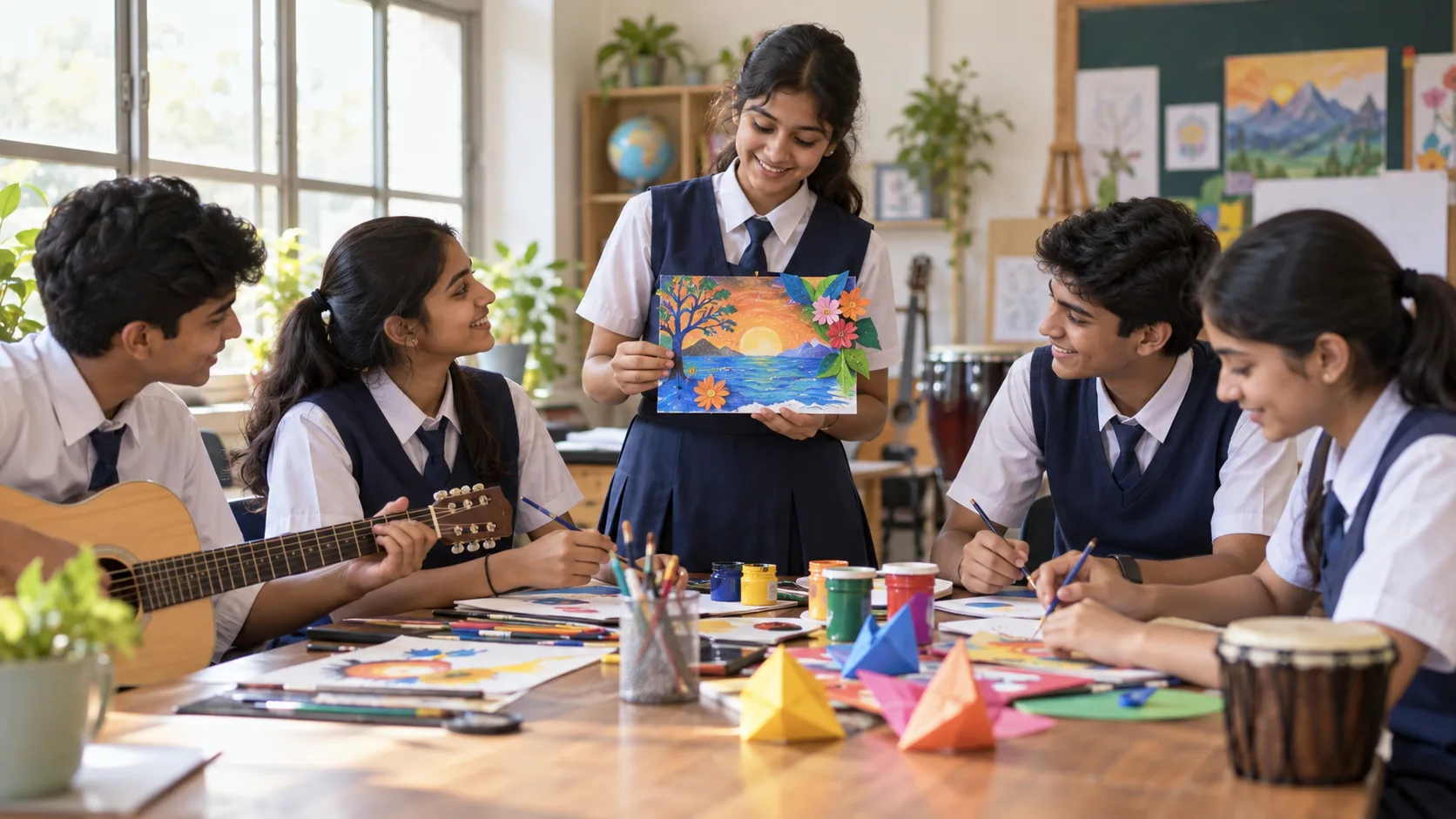
Learning Through Participation
School life includes many experiences beyond lessons and examinations. A student may help prepare a cultural programme, take part in a discussion, contribute to a group project, or reflect on an educational visit. These experiences offer opportunities to practise skills that are difficult to develop through written work alone.
Participation can also help students discover interests they have not previously explored. A quiet child may enjoy storytelling, while another may show an ability to organise a task or explain an idea. School activities provide a setting in which children can try different roles and learn more about themselves.
Making Room for Different Strengths
Students do not all express their abilities in the same way. Some are comfortable with written assignments, while others communicate more easily through speaking, drawing, movement, or practical work.
A varied school experience allows children to explore these differences. Participation does not remove the importance of academic learning. It adds opportunities for students to recognise abilities that can support their broader development.
Adults should avoid labelling children too quickly. A student who hesitates during one activity may respond differently to another. Providing several opportunities over time is more useful than drawing conclusions from a single performance.
Practising Communication in Meaningful Settings
School activities often require students to communicate for a clear purpose. They may introduce a programme, explain a project, ask a question during a visit, or share an observation with classmates.
These tasks give students practice in organising their thoughts and considering their audience. They learn that effective communication involves clarity, preparation, and listening.
For hesitant speakers, smaller roles can offer a starting point. Reading a short passage or contributing one idea to a group can be a meaningful step. Supportive feedback helps students identify what went well and what they can improve next time.
Learning the Responsibilities of Teamwork
A shared activity requires more than bringing students together. It involves agreeing on responsibilities, completing tasks, and communicating when difficulties arise.
Students may discover that classmates work at different speeds or have different ideas. Learning to discuss these differences respectfully is part of cooperation. They also need to understand that their contribution affects the wider group.
Teachers can support teamwork by defining expectations clearly and ensuring that responsibilities are fairly distributed. Reflection afterwards can help students recognise both the result and the quality of their cooperation.
Understanding Culture Through Participation
Cultural programmes offer opportunities to explore language, stories, music, traditions, and shared occasions. When students understand the meaning behind an activity, participation becomes more educational.
For example, preparing a presentation about a celebration can involve reading, discussion, writing, and performance. Students can ask how traditions are observed, what values they express, and how practices differ between communities.
Respectful discussion matters. Cultural learning should encourage appreciation and curiosity while allowing room for different backgrounds and experiences. Students can learn to value their own heritage and engage thoughtfully with the traditions of others.
Connecting Educational Visits with Classroom Learning
An educational visit becomes more useful when students know what they are looking for. Before a visit, teachers can introduce relevant questions and encourage students to identify topics they want to understand.
During the experience, students can observe carefully and record useful information. Afterwards, a discussion, written reflection, or presentation can help connect those observations with classroom concepts.
The destination alone does not determine the learning value. Preparation and reflection are equally important. Students should be able to explain what they noticed, what surprised them, and which questions remain unanswered.
Developing Responsibility Through Small Roles
School activities can introduce manageable responsibilities. A student may prepare materials, check a list, coordinate a small group, or make sure a task is completed on time.
These roles offer practice in planning and accountability. Students learn that accepting responsibility means following through and asking for help when necessary.
Leadership can also develop through these everyday actions. It does not always involve speaking on a stage or holding a formal position. Listening carefully, supporting a classmate, and helping a group stay organised are valuable forms of contribution.
Helping Parents Support Participation
Parents can encourage participation by showing interest in the experience rather than focusing only on prizes or public recognition. Questions such as “What did you enjoy?” and “What did you learn?” invite children to reflect.
It is also helpful to respect individual interests. Children can be encouraged to try unfamiliar activities without being expected to enjoy every one.
When a performance or project does not go as planned, families can discuss the experience calmly. Recognising preparation, effort, and improvement helps children view participation as an opportunity to learn.
Creating a Richer School Experience
For the Meera Niketan community, school activities offer meaningful ways to connect learning with expression, cooperation, and responsibility. Events and educational experiences can give students opportunities to contribute while discovering new interests.
The value of participation lies in the skills students practise and the understanding they develop. With thoughtful guidance, these experiences can help children become more confident communicators, considerate teammates, and responsible learners who recognise that growth takes place throughout school life.